

An aviation enthusiast since childhood, I follow the evolution of air transport worldwide with great interest. Through Uspassengers.com, I focus on analyzing the latest news from American airlines and all carriers operating to and from the United States: new routes, fleet renewals, inter-company agreements, airport developments, and more.
The slots formerly held by Spirit, and now relinquished, are expected to be awarded to the New York-based carrier. However, this unique type of acquisition comes with numerous restrictions.
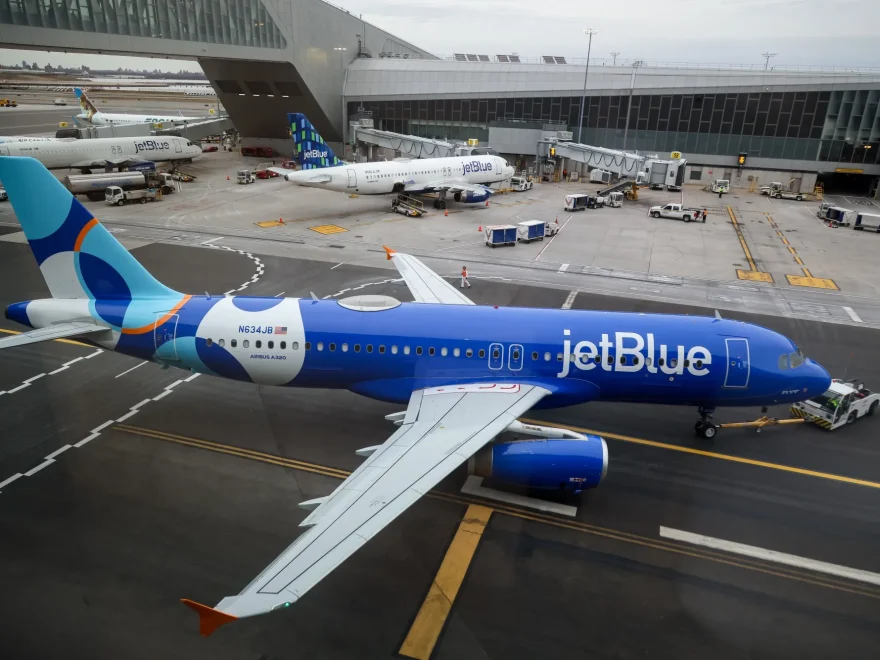
When Spirit Airlines ceased operations, it left behind a highly coveted asset: its foothold at LaGuardia. At this New York airport, takeoffs cannot happen at just any time; every movement corresponds to a “slot”, a scheduled authorization granted by federal authorities. JetBlue won the court-supervised auction, agreeing to pay $57.5 million for 22 of these slots. Frontier, the runner-up, lost out by a margin of just one million dollars.
FAA approval required
One might assume that a willing buyer and seller need no one else’s permission to strike a deal. In this case, however, they do. A slot is not property in the traditional sense but a federal operating authorization; the regulations governing LaGuardia generally prohibit their sale or purchase. Consequently, JetBlue and Spirit sought an exception. On August 31, the agency announced its intention to grant the request, deeming the transaction to be in the public interest and without safety implications, given that the total volume of flights at LaGuardia remains unchanged.
The FAA is not granting this green light without safeguards. JetBlue will be prohibited from leasing or trading these slots until April 2028, and reselling them is strictly off the table. The agency also emphasizes that it retains absolute control over these authorizations and reserves the right to revoke them. In other words, JetBlue gains the right to use the slots, but not the right to profit from them as a financial asset. What this means for JetBlue
With this acquisition, the airline would increase its authorizations from 31 to 53 – a rise of approximately 71% – thereby boosting its share of the airport from around 2.7% to 4.6%. This remains modest compared to the industry giants: Delta and American together control 73.4% of the slots. This is precisely what makes the deal acceptable to regulators, who view JetBlue as a smaller player whose expansion could stimulate competition.
Commercially, JetBlue has mentioned the possibility of adding up to 12 daily round-trip flights by 2027, though it has not yet disclosed specific destinations. Its current network from LaGuardia relies heavily on Florida routes, led by Fort Lauderdale and Orlando.
An intriguing move
The purchase comes as something of a surprise. JetBlue had cut back on several routes in 2024 and dropped the LaGuardia-Boston service due to a lack of profitability. The price paid is also about one-third lower than the value Spirit had estimated during its liquidation. There is also a practical hurdle: JetBlue operates out of the Central Terminal, whereas Spirit used the Marine Air Terminal, and the airline is reportedly considering a move there.
What happens next?
Nothing is set in stone yet. A 20-day public consultation period precedes the final decision, while JetBlue has not yet announced a precise timeline. Travelers will likely have to wait until 2027 to see new flights appear, and the final decision from the FAA – which may have been issued in the interim – remains to be confirmed.