
Airport waiting areas are far from calm and relaxing. A chaotic wait in a terminal only increases the stress of tired travelers. That’s why the option of relaxing in the comfort of an airport lounge is so appealing. American Airlines Admirals Club Lounges offer precisely the amenities travelers need to continue their journey in peace.
Accessing the Admirals Club Lounge before your flight can add a touch of elegance and refinement to your trip.
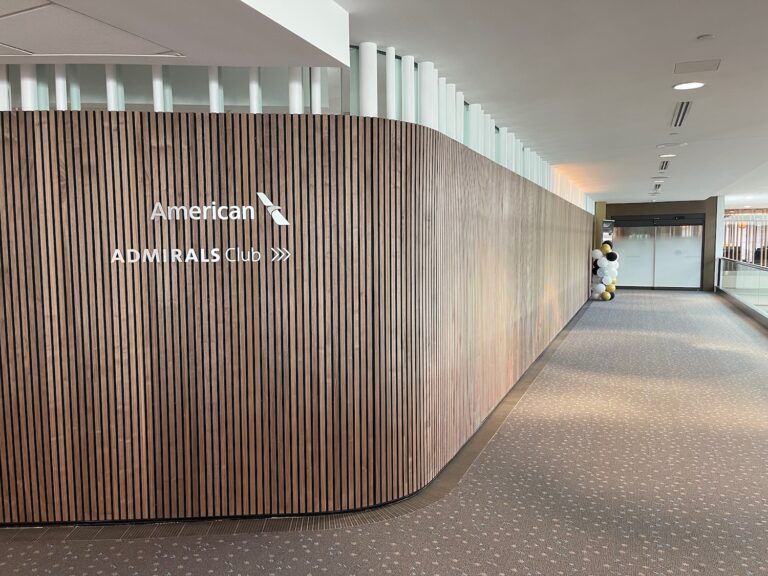
Which airports have an Admirals Club lounge?
Here is the list of airports currently featuring an American Airlines Admirals Club lounge:
American Airlines Hubs
|
Airport |
Terminal(s) / location |
| Dallas-Fort Worth (DFW) | Terminal A (across from gate A24), B (between B3 and B4), C (between C19 and C20), D (near D24), E (satellite, mezzanine) |
| Charlotte (CLT) | Single terminal: Concourse A (near A1, grab-and-go “Provisions” format), Concourse B (between gates 3 and 5), Concourse C (at the C/D junction) |
| Chicago O’Hare (ORD) | Terminal 3: Concourse G (across from G8), H/K (between H6 and K6), L (before L1) |
| Miami (MIA) | North Terminal, Concourse D: across from D30 and on level 3 above D15 |
| Philadelphia (PHL) | Terminal A-West (between A15 and A16), Terminal B/C (level 3), Terminal F (level 2, above the food court) |
| Phoenix (PHX) | Terminal 4: Concourse A (above A7/A9 and between A19/A21) and Concourse B (above B5/B7) |
| New York JFK | Terminal 8, Concourse C (level 3, across from gate 42) |
| New York LGA | Terminal B, Concourse A (near gates 30 and 31) |
| Washington DCA | Terminal 2: Concourse C (near C24) and Concourse E (near E46); the Concourse D club (near D36) is temporarily closed |
| Los Angeles (LAX) | Terminal 4 (across from gate 40), Terminal 5, American Eagle Regional Terminal |
| Atlanta (ATL) | North Domestic Terminal, Concourse T (across from T11) |
| Boston (BOS) | Terminal B (upper level, near B4) |
| Denver (DEN) | Concourse C (near gate 32) |
| Newark (EWR) | Terminal A (mezzanine, across from A8) |
| Houston (IAH) | Terminal A (near A25 and A26) |
| Las Vegas (LAS) | No Admirals Club |
| Orlando (MCO) | Terminal B (near gate 55) |
| Seattle (SEA) | No Admirals Club (members can use the Alaska Lounges in Concourses C and D and the North Satellite) |
| San Francisco (SFO) | Terminal 1 (after security, near B13) |
| Fort Lauderdale (FLL) | No Admirals Club |
| Tampa (TPA) | Airside F (near gate 85) |
| Austin (AUS) | Main terminal (across from gate 22); a second club near gate 14 is announced |
| Raleigh-Durham (RDU) | Terminal 2 (across from C1 and C3) |
| Pittsburgh (PIT) | Main terminal (mezzanine, main lobby past security) |
| London Heathrow (LHR) | Terminal 3 (departures level, past passport control, lounge area H) |
| Buenos Aires Ezeiza (EZE) | Terminal B (across from gate 9, upper level), shared with Iberia |
How to access the Admirals Club Lounge
You must present a boarding pass for the same day on American, Aer Lingus, or a Oneworld airline, regardless of the access method (membership, travel class, AAdvantage status, or One-Day Pass). Lifetime members are exempt from the same-day flight requirement.
For your information, a one-day pass costs $79 (or 7,900 AAdvantage miles) when available. You can purchase it from your AAdvantage account or directly from this link if you don’t already have one.
Access to an Admirals Club lounge is subject to availability:
Meeting the access requirements does not guarantee entry, as the lounge may be full.
Therefore, it’s best to arrive early, especially during peak hours and in major hubs like Miami, Dallas, Charlotte, and Philadelphia.
Admirals Club membership cost
If you travel regularly with American Airlines, Admirals Club membership is an expense worth reconsidering.
The standard membership costs between $1,200 and $1,400 per year, depending on your frequent flyer status. Executive Platinum members enjoy the lowest rate at $1,200. All other members pay $1,400. Payment with AAdvantage miles is still possible. However, you should check the conversion rate at the time of purchase.
|
Package |
Annual Fee | Guests |
Partner Lounges |
|
Standard (Executive Platinum) |
$1,200 | Yes | Yes |
| Standard (Classic Member) | $1,400 | Yes |
Yes |
|
Single |
$750 | No | No |
| Day Pass (per visit) | $79 | No |
No |
Card vs membership
|
Direct membership |
Single membership | Citi Executive card | |
| Price | $1,200–$1,400 | $750 |
$695 |
|
Guests |
Family or up to two | None | Family or up to two |
| Partner lounges | Yes | No |
Yes |
|
Extra perks |
None | None | Travel credits, miles, bag and boarding perks |
| Commitment | Lounge only | Lounge only |
Credit check, spending habits |
Guest Policy
The rules for bringing loved ones to Admirals Club lounges are quite generous. A member can bring their immediate family (spouse, domestic partner, and/or children under 18), or a maximum of two guests. It’s one or the other: the family option or the two-guest option.
One detail to note: the limit applies to children under 18. The member must accompany their guests, and the guests must present a boarding pass valid for the same day on American Airlines or a oneworld airline.
Partner Lounges (oneworld)
Membership isn’t limited to American Clubs. It grants access to over 50 partner lounges in select destinations, depending on their capacity. These include: Japan Airlines’ Sakura Lounge in Tokyo (Haneda and Narita), the Qantas Club in Singapore, and the Encalm Lounge in Delhi.
Guests are admitted according to the same rules as at Admirals Club. However, holders of a one-day pass and authorized users of the Citi / AAdvantage Executive card do not have access.
Admirals Club or Flagship Lounge?
For your information, American Airlines operates two types of lounges in the United States—Admirals Club and Flagship Lounge, and travelers often confuse them. Both bear the airline’s logo, but they cater to different clientele and offer different dining options.
Admirals Club: This is the everyday lounge. It’s widespread, accessible through various means (membership, credit card, status, ticket), and designed to make a layover more bearable.
Flagship Lounge: This is the lounge for long-haul flights. It’s reserved for a select few major airports, and access is primarily granted to those with an international ticket in premium class or with high status. It’s designed to give the impression of a premium start to a journey.
Flagship Lounges are concentrated in hubs with high intercontinental traffic: Dallas-Fort Worth, Miami, New York-JFK, Los Angeles, and Chicago-O’Hare.
Who can enter?
Admirals Club offers broad access:
– Paid annual membership or day pass, depending on the location;
– Co-branded US credit cards;
– High AAdvantage status on international flights;
– Business or First Class tickets on select international or premium transcontinental routes;
– Oneworld Sapphire and Emerald statuses (see below).
Flagship Lounge offers more restricted access:
– Business or First Class passengers on long-haul flights;
– Highest statuses on international flights;
– Oneworld Emerald and, where applicable, Sapphire members on eligible routes;
– Premium concierge programs.
What you’ll find inside
In an Admirals Club, you’ll generally find:
– A reasonable number of seats and power outlets;
– A simple buffet (snacks, soup, salads, hot dishes depending on the time of day); – Wi-Fi, workspaces, and sometimes meeting rooms;
showers are available at select locations only.
In a Flagship Lounge, you’ll typically find:
– a more refined setting, with distinct areas (relaxation, work, dining) and views of the runways;
– more ambitious cuisine, sometimes created by renowned chefs or culinary partners;
– more numerous and comfortable showers;
– a generally calmer atmosphere, as access is controlled.
Some Flagship Lounges (DFW, JFK, LAX, MIA) also feature a Flagship First Dining area, a sit-down restaurant reserved for long-haul first-class passengers.
The Crowd Factor
By comparison, a very open Admirals Club can be overcrowded during peak hours, especially at a hub before major departure waves.
A Flagship Lounge, with its more controlled access, is generally more pleasant, although stricter access criteria have brought the two closer together in some airports. On a long night flight, this difference in serenity often weighs more than the quality of the buffet.
Admirals Club vs. Competitors
Admirals Club isn’t the only airline that wants you to pay for a comfortable seat and access to a relaxation area. Every American airline has its own lounge, with different entry rules:
|
Exhibition |
Entry fee | Guests |
Key takeaways |
|
Admirals Club |
$1,400 for standard membership, or $750 for the solo offer | Immediate family or up to two guests with standard membership only | Day pass remains $79 |
| Delta Sky Club | $695 (Individual) or $1,495 (Executive) | Two free guests with Executive membership only |
Membership reserved for Medallion members |
|
United Club |
$750 per year, no guests | Guest pass sold for $59 | Priority Pass does not include access |
| Centurion Lounge | No membership required: access via American Express cards | $50 per guest |
Card-bound, not ticket-bound |
|
Priority Pass |
Variable subscription | Paid, price varies by salon |
Independent network of airlines |